
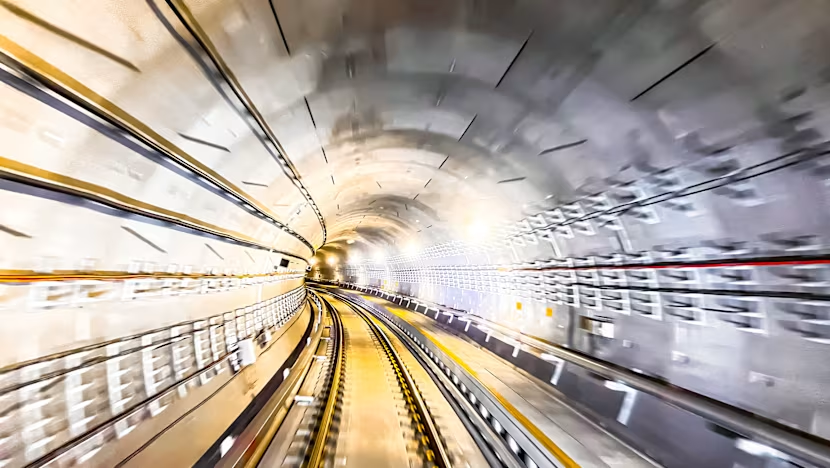
Singapore — Tunnel squatting, the act of individuals entering and occupying MRT tunnels without authorization, has emerged as a serious operational and security concern. As CNA explains, such incidents disrupt train schedules, endanger lives, and expose vulnerabilities in urban transit systems.
From a global business‑security analysis perspective, tunnel squatting is not merely a local nuisance. It reflects the broader challenge of safeguarding critical infrastructure in densely populated cities. MRT systems are designed for efficiency and safety, yet unauthorized access reveals gaps in surveillance, enforcement, and public awareness.
Observers note that tunnel squatting can cause cascading effects: delays ripple across the network, economic productivity suffers, and public trust in transit reliability erodes. For businesses, these disruptions translate into lost working hours and logistical inefficiencies, underscoring the economic dimension of what might otherwise be seen as a social issue.
The editorial narrative emphasizes that security in transit systems is inseparable from urban resilience. Preventing tunnel squatting requires investment in monitoring technologies, stronger coordination between operators and law enforcement, and public education campaigns. It also demands recognition that infrastructure security is not only about physical barriers but about cultivating civic responsibility.
Furthermore, the phenomenon highlights the human side of urban security. Individuals who squat in tunnels often act out of desperation or protest, reminding policymakers that enforcement must be balanced with social interventions. Addressing root causes — housing insecurity, mental health, or social discontent — is as vital as tightening security protocols.
Ultimately, tunnel squatting is more than a disruption to train schedules. It is a global signal that urban transit systems, as lifelines of modern economies, must be protected with both technological vigilance and social empathy.