



Daphne Munguia Muro Receives Inspiring Women Excellence Award 2026 | FEDA Comercializadora Mexico
Daphne Munguia Muro, CEO of FEDA Comercializadora in Mexico, receives the Inspiring Women Excellence Award 2026 in Jakarta. Explore her leadership, dietary supplement manufacturing, quality management, and global industry trends.
A Mexican Business Executive Recognised in Indonesia
JAKARTA, INDONESIA — The global dietary supplement industry operates at the intersection of consumer demand, product development, manufacturing expertise, and regulatory oversight.
As companies seek to introduce new products and respond to changing market preferences, specialised manufacturers play an important role in transforming product concepts into finished goods.

These businesses must balance technical capabilities with production efficiency, quality management, and customer expectations.
Within this industry, Ms. Daphne Munguia Muro, Chief Executive Officer (CEO) of Mexico-based FEDA Comercializadora, has received international professional recognition.
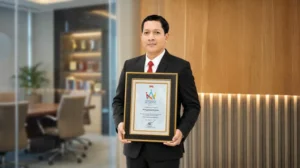
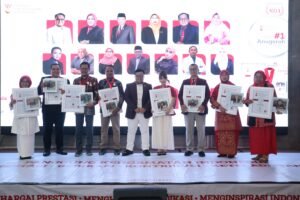
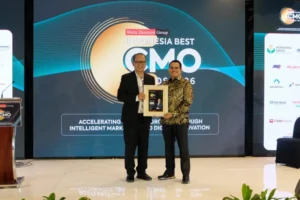
Daphne was named a recipient of the Inspiring Women Excellence Awards 2026 during Award Trends Summit 2026, organised by Award Magazine on Saturday, 24 January 2026, at Grand Mercure Kemayoran Hotel in Jakarta, Indonesia.
The programme was led by GP Rajasa Pranadewa.
The recognition brought attention to Daphne’s leadership role in a manufacturing company based in Guadalajara, Mexico.
It also provides an opportunity to examine the wider industry in which FEDA operates, particularly the development of contract manufacturing services, the importance of quality systems, and the responsibilities of business leaders in a specialised consumer product sector.
The Changing Structure of Dietary Supplement Manufacturing
The dietary supplement industry includes businesses involved in ingredient sourcing, formulation, manufacturing, packaging, branding, distribution, and retail.
Not every company participating in this market operates its own production facilities.
Some businesses focus on product development, marketing, and customer relationships while relying on specialised manufacturers to produce their goods.
This arrangement is commonly known as contract manufacturing.
The model allows brand owners to access production capabilities through commercial partnerships, subject to agreed specifications, capacity, and regulatory requirements.
For manufacturing service providers, the business model creates opportunities to work with different clients and product formats.
However, it also introduces operational complexity.
Manufacturers must coordinate technical specifications, production schedules, quality procedures, packaging requirements, and customer communication.
The ability to manage these responsibilities is central to the sustainability of contract manufacturing businesses.
FEDA Comercializadora’s Business Model
FEDA Comercializadora is a Mexican company based in Guadalajara, Jalisco.
According to its official company information, FEDA provides dietary supplement formulation, manufacturing, and packaging services.
Its publicly described capabilities include ready-to-drink liquid products, tablets, powders, and capsules.
The company also offers packaging services, including blister packaging, alongside technical support for product formulation.
These services position FEDA within the manufacturing supply chain for businesses seeking assistance in developing supplement products.
Rather than focusing exclusively on a single finished consumer brand, the company’s described service model supports clients with different product requirements.
This type of operation requires communication between commercial and technical teams to ensure that customer specifications are understood and appropriately managed.
Although the company’s published service portfolio provides insight into its business activities, publicly available descriptions alone do not establish production volume, market share, revenue growth, or international sales performance.
Those indicators would require additional verified data.
Leadership in a Technically Demanding Industry
As CEO of FEDA Comercializadora, Daphne Munguia Muro holds an executive position in an industry that requires coordination across several specialised functions.
Manufacturing operations depend on the interaction of technical development, production planning, quality procedures, packaging, and customer service.
Leadership therefore involves more than commercial decision-making.
It also requires attention to organisational processes and the people responsible for carrying them out.
A Spanish-language company profile published by Quality Magazine discussed FEDA’s manufacturing activities and its approach to serving customer requirements.
The publication also described Daphne’s emphasis on involving different departments in discussions and training activities.
Such practices are relevant to organisational development because manufacturing challenges often involve more than one department.
For example, a change in product formulation may affect production procedures, while packaging requirements may influence scheduling and logistics.
Cross-functional communication can help organisations address these connections.
However, the measurable effects of particular management practices would need to be assessed through operational performance data.
Quality Management as a Business Requirement
Quality management is especially important in industries involving products intended for human consumption.
Dietary supplement manufacturers must consider product specifications, ingredient handling, production consistency, packaging, and applicable safety requirements.
Regulatory obligations differ across jurisdictions and product categories.
Consequently, companies operating in this sector must understand the standards relevant to their activities and the markets in which products will be distributed.
FEDA Comercializadora has published a quality policy identifying continuous improvement, risk reduction, workforce development, and customer service among its stated organisational commitments.
The policy provides a reference for understanding the company’s declared approach to quality management.
However, a published policy is not equivalent to independent certification or confirmation that every product meets the requirements of a particular market.
Such claims require appropriate documentation and verification.
For contract manufacturers, the credibility of quality systems depends on their consistent implementation throughout the production process.
Product Formulation and Technical Capabilities
Product formulation is an important stage in dietary supplement development.
Businesses must consider the intended product format, ingredient characteristics, stability, manufacturing feasibility, and applicable regulatory requirements.
FEDA Comercializadora states that it provides formulation support involving chemistry specialists.
This service can be relevant to clients seeking technical assistance during product development.
The ability to connect formulation support with manufacturing and packaging may help coordinate different stages of a project.
Nevertheless, product development remains subject to technical evaluation and compliance requirements.
The availability of formulation services should not be interpreted as proof of clinical effectiveness, regulatory approval, or particular health benefits for finished products.
Any such claims must be supported by appropriate evidence.
Packaging and the Importance of Product Presentation
Packaging is another important component of supplement manufacturing.
It serves practical functions related to product containment, handling, storage, and information presentation.
Packaging choices must take into account the characteristics of the product and relevant labelling requirements.
FEDA’s publicly described services include different packaging solutions, including blister packaging.
For brand owners, access to packaging capabilities through a manufacturing partner can be relevant to coordinating product development.
However, packaging must be evaluated according to its suitability for the product and the regulations applicable to its intended market.
Attractive presentation alone cannot substitute for accurate information, product safety, or quality assurance.
The Role of Business-to-Business Relationships
Contract manufacturing is fundamentally a business-to-business activity.
Unlike direct consumer retail, manufacturing partnerships often involve repeated technical discussions, production planning, and ongoing coordination.
A brand owner may depend on its manufacturing partner for timely communication, consistency of specifications, and appropriate handling of production requirements.
For manufacturers, maintaining these relationships requires organisational discipline.
Customer service is therefore connected to production quality and operational reliability.
FEDA’s public company profile highlights its attention to client requirements and tailored services.
These priorities are relevant to the type of commercial relationships the company seeks to develop.
However, assessing actual customer satisfaction or retention would require evidence beyond promotional descriptions.
Workforce Development and Organisational Resilience
Technology and equipment are important elements of manufacturing, but human expertise remains essential.
Employees must understand production procedures, technical requirements, and the responsibilities associated with their roles.
Training can support the development of these capabilities.
Communication between departments can also help organisations respond to operational challenges.
Daphne’s reported approach to departmental discussions and training provides insight into the management practices associated with FEDA’s public profile.
In a specialised manufacturing environment, workforce development can be relevant to quality consistency and organisational adaptability.
The effectiveness of such initiatives, however, should be evaluated through evidence such as training outcomes, process improvements, and operational performance.
Corporate Responsibility in Modern Manufacturing
Manufacturing companies operate within networks of employees, suppliers, customers, and surrounding communities.
Their responsibilities therefore extend beyond the completion of individual production orders.
FEDA Comercializadora has published corporate social responsibility policies addressing ethical conduct, transparency, stakeholder relations, and sustainability.
The company also identifies workforce training and relationships with local suppliers among its stated community development priorities.
These documents describe organisational commitments.
They do not, by themselves, establish the scale or measurable impact of specific programmes.
For businesses seeking long-term credibility, responsible conduct requires implementation, documentation, and accountability.
Mexico’s Manufacturing Capabilities and International Business Opportunities
Mexico has an established manufacturing economy serving a variety of domestic and international industries.
Within this broader environment, specialised businesses provide services to companies seeking technical and production capabilities.
FEDA Comercializadora operates in the dietary supplement segment of this manufacturing landscape.
Its location in Guadalajara places it within one of Mexico’s major urban and commercial centres.
For manufacturers considering international business opportunities, cross-border activity introduces additional responsibilities.
Regulatory requirements, import procedures, product standards, labelling rules, and customer expectations may differ between markets.
Although Daphne’s recognition took place in Indonesia, the award does not establish that FEDA has entered the Indonesian market or developed operations elsewhere in Southeast Asia.
Any assessment of the company’s international expansion would require separate evidence of commercial activity.
Women Executives and Manufacturing Leadership
Women’s participation in executive leadership is relevant across industries, including manufacturing and technical services.
Such positions involve strategic planning, operational responsibility, financial decision-making, and the management of professional teams.
As CEO of FEDA Comercializadora, Daphne Munguia Muro represents women’s participation in the leadership of a specialised manufacturing business.
Her professional role provides a perspective on the responsibilities associated with managing an organisation that serves other businesses.
The Inspiring Women Excellence Awards 2026 recognition acknowledges her professional profile within the award organiser’s programme.
At the same time, long-term leadership performance should be assessed through organisational practices, business outcomes, and sustained responsibilities rather than recognition alone.
International Recognition and Corporate Reputation
Daphne received the Inspiring Women Excellence Awards 2026 from Award Magazine during the Award Trends Summit 2026 in Jakarta.
The event created an international setting for recognising a Mexico-based business executive.
Professional recognition can contribute to public awareness of an individual’s career and the company they lead.
For businesses operating in specialised industries, increased visibility may provide an opportunity to communicate their activities to audiences beyond their home market.
However, professional awards are distinct from manufacturing certifications, product approvals, official industry rankings, or independent assessments of commercial performance.
A company’s long-term reputation depends on the quality of its services, its relationships with stakeholders, and its ability to meet relevant obligations.
Industry Challenges and Future Priorities
The dietary supplement manufacturing sector faces continuing challenges associated with product development, regulatory requirements, customer expectations, and operational efficiency.
Manufacturers must remain attentive to changes in ingredients, production technology, packaging practices, and the requirements of the markets they serve.
For contract manufacturing businesses, adaptability must be balanced with process control.
Companies may need to accommodate different client specifications while maintaining consistent standards.
Strategic priorities can therefore include technical capability development, workforce training, quality management, and the effectiveness of customer relationships.
For FEDA Comercializadora, its published service portfolio and organisational policies provide a view of the areas in which the company operates.
The effectiveness of its future development will depend on implementation and measurable business outcomes.
Recognition and the Continuing Responsibility of Leadership
Daphne Munguia Muro’s receipt of the Inspiring Women Excellence Awards 2026 marks a professional recognition in her role as CEO of FEDA Comercializadora.
The company’s activities in formulation, manufacturing, and packaging place it within a specialised segment of the dietary supplement industry.
Its business model reflects the role of manufacturers that provide technical and production services to other companies.
At the same time, the industry demands attention to product quality, regulatory compliance, organisational coordination, and customer relationships.
These responsibilities remain central regardless of professional recognition.
In a global manufacturing environment shaped by changing customer needs and increasing expectations for accountability, sustainable leadership is reflected in the ability to develop people, maintain reliable processes, and build lasting business relationships.
From Guadalajara, Mexico, to an international awards programme in Jakarta, Daphne Munguia Muro’s professional journey offers a perspective on women’s leadership and the continuing importance of quality-driven management in specialised manufacturing industries.