


Yili’s seventh consecutive Thailand FDA Quality Award highlights the growing importance of quality management, digitalization, localization and supply-chain resilience in the global food industry.
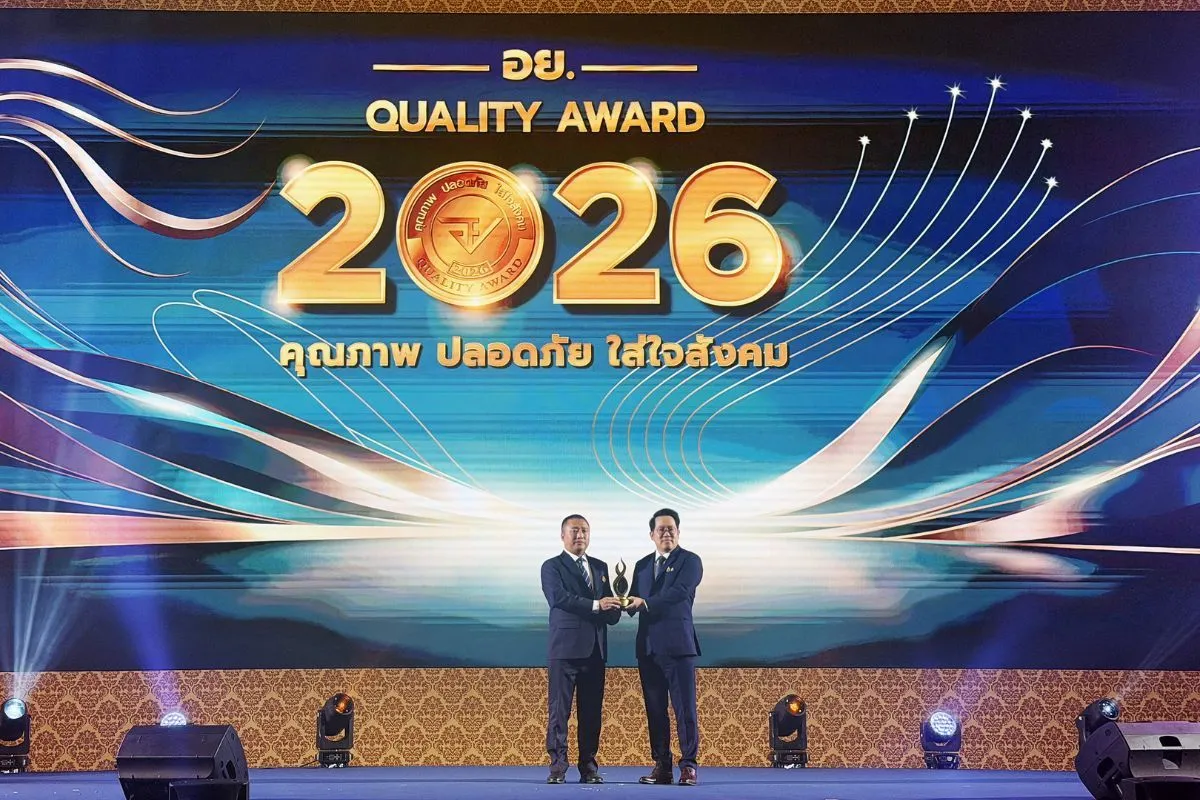
Yili Group’s latest achievement in Thailand offers more than a snapshot of one company’s performance. The Chinese dairy group’s Thailand subsidiary has received the Thailand Food and Drug Administration (FDA) Quality Award for the seventh consecutive year, while also securing the program’s Best of the Best Award for the second time, following its first recognition in 2023.
The recognition comes at a time when food and beverage companies worldwide are facing increasingly complex expectations around product safety, supply-chain transparency, regulatory compliance, operational efficiency and consumer preferences. For multinational companies, maintaining consistent standards across different markets has become an increasingly important part of international growth.
Presented by Thailand’s FDA under the Ministry of Public Health, the award evaluates areas including raw-material traceability, smart manufacturing, product testing, cold-chain storage and distribution, and corporate social responsibility. The assessment process includes document reviews, field inspections, sample testing and broader evaluations of company capabilities.
The breadth of the assessment reflects a wider transformation within the food industry. Quality is increasingly being managed as an end-to-end process rather than simply as an inspection performed after manufacturing. From sourcing to distribution, companies are expected to maintain systems that allow them to identify risks and monitor product integrity throughout the supply chain.
Digitalization and the New Quality Infrastructure
Yili’s operations in Thailand illustrate how digitalization is becoming embedded in food-quality management. The company uses an Enterprise Resource Planning system to monitor operations spanning raw-material procurement, manufacturing, warehousing and logistics.
The company has also upgraded pretreatment systems, strengthened employee training and enhanced the management of critical control points. Together, these measures connect technology with human expertise and operational procedures.
For the wider food industry, this approach is significant because digital systems can support greater visibility across increasingly complex supply networks. As companies operate across multiple countries, data-based monitoring can help connect procurement, manufacturing and distribution into a more integrated operational framework.
However, technology alone does not determine quality. The Yili case also emphasizes workforce capabilities, process discipline and the ability to translate quality standards into day-to-day operations.
Localization Becomes a Global Growth Strategy
Another important element of Yili’s Thai operations is localization.
According to information released about the award, around 80 percent of Yili’s raw and auxiliary materials in Thailand are sourced locally, while Thai employees account for approximately 95 percent of its workforce.
For multinational food companies, local sourcing can provide more than an economic connection to the host market. It can also strengthen supply-chain responsiveness and improve understanding of local operating conditions.
Localization is also reflected in Yili’s product strategy. Its Cremo ice cream brand has developed products tailored to Thai preferences, including rabbit-ear-shaped ice cream and varieties featuring ingredients such as nata de coco and pandan.
This illustrates an increasingly common tension in global consumer industries: companies need to maintain recognizable international standards while adapting products to individual markets.
Rather than treating standardization and localization as mutually exclusive, companies can apply standardized quality and management systems while allowing product development and market execution to reflect local preferences.
Thailand and the Southeast Asian Consumer Market
Thailand represents an important market within Southeast Asia, where food and beverage companies encounter both significant consumer opportunities and complex market-entry requirements.
Yili’s experience demonstrates how regulatory compliance can become part of an international expansion strategy rather than simply an administrative obligation. Repeated recognition from the Thai FDA provides a public indication that the company has maintained its quality-management approach within the country over multiple years.
The seventh consecutive award should nevertheless be viewed specifically as recognition within the Thailand FDA Quality Award framework. It is not, by itself, a comprehensive measurement of Yili’s overall global business performance.
For multinational companies, individual market achievements are often building blocks within a broader international strategy. Operational credibility in one country can provide experience that may be applied to other markets, although each market still requires its own regulatory and commercial adaptation.
Corporate Responsibility and Local Integration
Yili’s activities in Thailand also extend beyond production and distribution.
In August 2026, the company launched a community initiative and donated 150,000 Cremo ice cream products to the Thai government, according to the company’s announcement. The initiative formed part of Yili’s wider corporate social responsibility activities in Thailand.
Such activities illustrate another dimension of international expansion: multinational companies increasingly operate within broader stakeholder environments involving governments, communities, employees, suppliers and consumers.
Local integration can therefore become an important component of corporate strategy. For companies entering overseas markets, commercial operations and relationships with local communities can develop alongside one another.
What the Development Means for the Global Dairy Industry
The Yili case reflects several trends affecting the global dairy and food industry.
First, quality management is becoming increasingly integrated. Companies must manage safety and consistency across sourcing, manufacturing, storage and distribution rather than focusing exclusively on finished products.
Second, digital infrastructure is becoming part of operational resilience. Enterprise systems and data-based monitoring can help companies manage complex supply networks, although their effectiveness ultimately depends on implementation and workforce capabilities.
Third, localization is becoming a strategic component of international growth. Local employees, suppliers and product innovation can help multinational companies operate more effectively within individual markets.
Fourth, regulatory compliance increasingly intersects with corporate reputation. Repeated recognition from regulatory institutions can become part of a company’s broader credibility in a market, particularly in consumer-facing industries where trust is closely connected to product safety and quality.
These trends are relevant beyond the dairy sector. Food, beverage and consumer-goods companies operating internationally face similar challenges as supply chains become more interconnected and consumers become more attentive to product provenance, safety and corporate practices.
Looking Beyond a Single Market
Yili has stated that it plans to continue expanding across Southeast Asia and other international markets while maintaining consistent quality standards and refining products and services for local consumers. The strategy is aligned with its stated vision, “World Integrally Sharing Health.”
The company’s Thai experience therefore provides a useful case study of how a multinational food producer can combine global standards with local execution.
The broader lesson for the global industry is that international expansion increasingly requires more than access to consumers. Companies must build operating systems capable of meeting local regulations, maintain supply-chain visibility, develop products suited to local preferences and establish relationships within the communities where they operate.
Yili’s seventh consecutive Thailand FDA Quality Award is one example of how these elements can come together within an overseas market. As competition in the global food industry continues to evolve, the ability to maintain quality while adapting to local conditions will remain an important consideration for companies pursuing international growth.