The 2026 FIFA World Cup awards highlight Rodri, Mbappe and other stars while revealing broader trends in football performance, talent development and global commercial value.
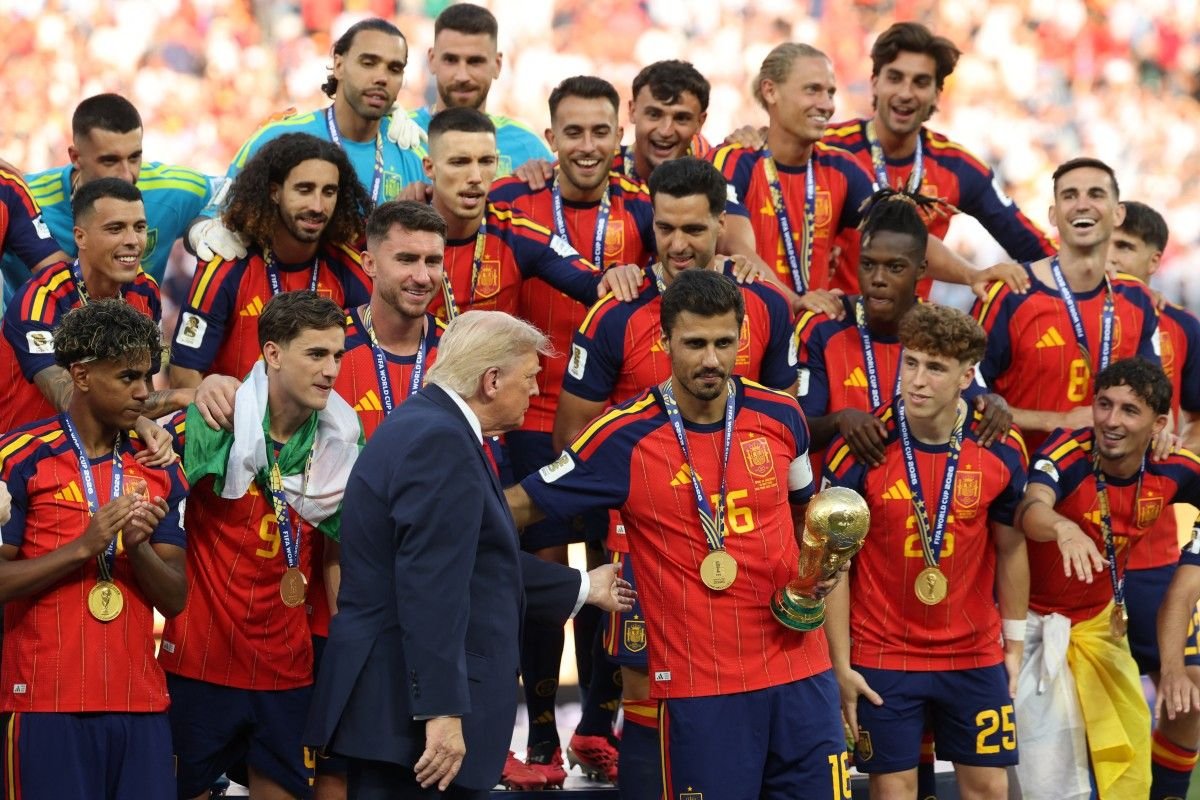
WORLDDIGESTMEDIA.COM — The FIFA World Cup 2026 ended with Spain lifting the trophy after a 1-0 extra-time victory over Argentina, but the tournament’s significance extends well beyond the final result. The individual awards handed out after the final provide another perspective on how modern football evaluates talent, leadership and competitive value.
Spain’s success was reflected prominently in the awards. Rodri received the adidas Golden Ball as the tournament’s best player, Unai Simon won the adidas Golden Glove, while Pau Cubarsi was named the FIFA Young Player of the Tournament. France’s Kylian Mbappe, meanwhile, secured the adidas Golden Boot after scoring 10 goals in eight matches.
The distribution of those awards is significant because it illustrates how football’s definition of elite performance has expanded. Goals remain central to the sport, but midfield control, defensive reliability, youth development and tactical intelligence are increasingly important components of a player’s overall value.
Rodri and the Growing Value of Midfield Intelligence
Rodri’s Golden Ball represents one of the clearest examples of how the modern football economy increasingly rewards influence that cannot always be measured through goals and assists.
The Spanish midfielder was a central figure in all eight of Spain’s matches. His ability to connect defence and attack, control possession and intervene at critical moments helped Spain secure its second World Cup title. In the final against Argentina, Rodri completed 101 of 105 passes, won 80 per cent of his duels and created two chances.
These numbers illustrate the economic value of a player who controls the structure of a match. For clubs, sponsors and broadcasters, such players are increasingly valuable because their influence extends across multiple phases of play.
FIFA’s assessment also highlights Rodri’s physical and tactical contribution. He recorded more high-intensity runs than any other player at the 2026 World Cup and made the most movements to receive the ball in front of the opposition’s defensive structure.
That combination of technical quality, physical output and tactical intelligence represents a broader trend in elite football: the most valuable players are increasingly those who can influence several dimensions of the game simultaneously.
Mbappe and the Global Power of Goals
If Rodri represents the value of control, Mbappe represents the enduring commercial and sporting power of goals.
The France captain scored 10 times during the tournament and collected the Golden Boot. He also received the Bronze Ball after finishing behind Rodri and Lionel Messi in the tournament’s best-player ranking.
His performance was particularly notable because France did not win the championship. This demonstrates that individual sporting value can remain exceptionally high even when a team does not reach the final.
According to Kompas.com, Mbappe’s 2026 goals took his World Cup total to 22, moving him ahead of Lionel Messi’s 21 and making him the leading men’s World Cup goalscorer.
Such records have implications beyond sporting statistics. A player’s global profile influences sponsorship opportunities, merchandising, digital engagement, media rights and commercial partnerships. In an increasingly connected sports economy, a World Cup record can become a long-term brand asset.
Spain’s Model: Collective Strength as a Competitive Advantage
The most striking feature of the 2026 awards, however, may be the concentration of individual recognition within Spain’s squad.
Rodri won the Golden Ball. Simon collected the Golden Glove after recording seven clean sheets in eight matches. Cubarsi received the Young Player Award after contributing to a defence that conceded only one goal throughout the tournament.
This suggests that Spain’s success was not based on one exceptional performer. Instead, it reflected a system capable of producing excellence across several positions.
From an industry perspective, this is important. Football organisations increasingly recognise that sustainable competitive advantage depends on player development infrastructure rather than relying exclusively on expensive recruitment.
A successful youth system can create sporting value, transfer value and long-term brand equity simultaneously.
Cubarsi’s recognition is particularly relevant in this context. A young defender becoming a global award winner provides evidence of the potential return from sustained investment in player development.
The Data Revolution Behind Modern Football
The 2026 World Cup also demonstrated the growing role of data in understanding player performance.
Traditional football evaluation often focused on goals, assists and clean sheets. Modern analysis is considerably broader, incorporating passing efficiency, positional movements, pressing intensity, defensive interventions, physical workload and the ability to create space.
Rodri’s Golden Ball illustrates this evolution. His influence is difficult to capture through a single headline statistic, yet detailed performance data provides a clearer picture of his contribution.
FIFA’s final Power Ranking also placed Rodri at the top of its defensive category, while Mbappe led the attacking category and Michael Olise topped creativity.
The development of such analytical frameworks has consequences throughout the football industry. Clubs can use them for recruitment, coaches for tactical planning, broadcasters for storytelling and sponsors for identifying players whose influence resonates with specific audiences.
A Bigger Tournament, A Bigger Global Marketplace
The scale of the 2026 World Cup amplified these trends.
The tournament was jointly hosted by Canada, Mexico and the United States and represented the first edition featuring 48 teams. Spain’s 1-0 victory over Argentina in the final marked the end of a tournament that FIFA described as the largest edition of the World Cup.
FIFA reported 308 goals across the tournament. The organisation also recorded more than 6.8 million spectators across the competition.
The larger tournament format creates more matches, more broadcast inventory and more opportunities for sponsors to engage audiences. At the same time, it increases the number of players exposed to a global audience.
For the sports business sector, that creates a larger ecosystem of potential commercial personalities.
The effect is especially relevant in emerging football markets, where international stars can become bridges between global sporting properties and local consumers.
Southeast Asia as a Growing Football Market
The globalisation of football also has implications for Southeast Asia.
Countries such as Indonesia, Vietnam, Thailand, Malaysia, Singapore and the Philippines have large and increasingly digital football audiences. International tournaments provide brands with opportunities to reach consumers through broadcasting, social media, streaming platforms and fan communities.
The commercial value of football therefore extends beyond stadiums and television screens. Digital content, short-form video, e-commerce, sports technology and fan data are increasingly important parts of the football economy.
The 2026 World Cup demonstrates how individual players can become global communication assets. Rodri represents tactical intelligence and leadership. Mbappe represents elite scoring and global star power. Cubarsi represents youth and future potential.
Each profile appeals to a different segment of the global market.
Reputation Has Become a Long-Term Asset
The World Cup awards also demonstrate the relationship between sporting performance and reputation.
Winning a major individual award can strengthen a player’s standing with supporters, clubs, sponsors and media organisations. It can also influence future commercial opportunities.
For businesses operating in sports, this makes reputation management increasingly important. Athletes are no longer simply competitors; they are global personalities whose public image can influence consumer behaviour.
The distinction between sporting achievement and commercial value is therefore becoming increasingly blurred.
A player who performs exceptionally at a World Cup can generate value long after the tournament ends, particularly when the performance is accompanied by records, leadership narratives and strong digital engagement.
The New Definition of Football Excellence
The complete 2026 award list captures this broader definition of excellence.
Rodri won the Golden Ball, Lionel Messi the Silver Ball and Mbappe the Bronze Ball. Mbappe also won the Golden Boot, Messi the Silver Boot and Jude Bellingham the Bronze Boot. Simon won the Golden Glove, Cubarsi the Young Player Award and the Netherlands the FIFA Fair Play Trophy.
The categories collectively reward creativity, scoring, goalkeeping, youth development and sportsmanship.
That diversity reflects a football industry that is becoming more sophisticated in how it measures value.
The future of elite football will therefore depend not only on finding players who can score goals, but also on identifying athletes capable of controlling games, adapting tactically, maintaining physical standards and contributing to a team’s wider competitive structure.
From World Cup Glory to Long-Term Value
Spain’s triumph provides the clearest example of how collective strength can produce individual recognition.
Rodri’s Golden Ball was the result of a tournament in which Spain combined possession, defensive organisation, tactical flexibility and leadership. Simon and Cubarsi’s awards reinforced the strength of the team’s defensive structure.
Mbappe’s Golden Boot, meanwhile, demonstrated that extraordinary individual productivity can remain valuable even without a championship medal.
Together, these stories reveal where global football is heading.
Performance is becoming more measurable. Talent development is becoming more strategic. Player reputations are becoming increasingly commercial. And major tournaments are becoming increasingly important platforms for the global sports economy.
The 2026 World Cup therefore leaves behind more than a list of award winners. It offers a snapshot of a football industry in transition—one in which sporting excellence, data, youth development, global audiences and commercial value are becoming increasingly interconnected.
For clubs, federations, investors, sponsors and sports-media companies, the message is clear: the future value of football will be shaped not only by who wins the trophy, but also by how effectively the sport develops, measures and communicates exceptional talent.