Indonesia’s 2026 Local Government Awards in Sulawesi highlight performance-based governance through healthcare, education, housing, environmental management and fiscal incentives.
MAKASSAR, Indonesia — Indonesia is placing greater emphasis on measurable performance at the subnational level as the government recognizes local administrations that demonstrate progress in essential public services and development priorities.
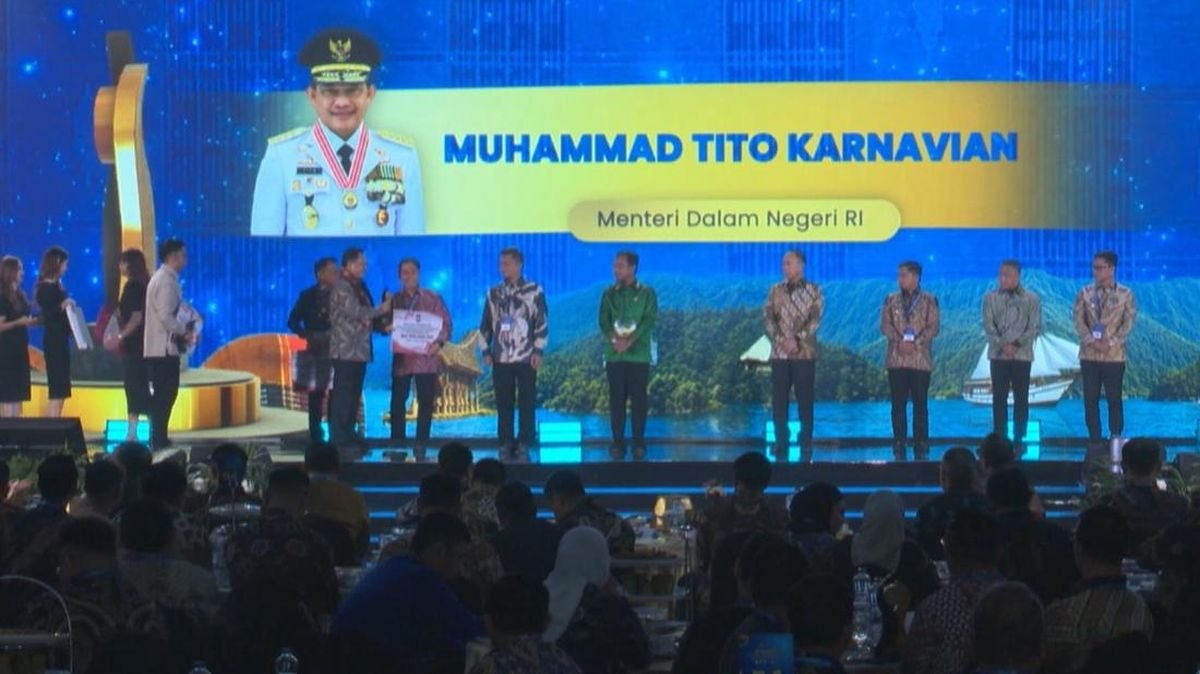
The latest example came through the 2026 High-Performing Local Government Appreciation Awards, Batch II for the Sulawesi Region, held in Makassar on September 18, 2026. Organized by Indonesia’s Ministry of Home Affairs, the programme recognizes provincial, municipal and regency governments across several policy areas considered important to public welfare.
The initiative comes as governments around the world increasingly face pressure to demonstrate that public spending translates into measurable outcomes. In Indonesia, the regional awards mechanism is designed to encourage local administrations to improve their performance while taking differences in fiscal capacity between regions into consideration.
Rather than focusing on a single measure of development, the Sulawesi awards cover four broad areas: waste management and environmentally friendly development, access to and quality of healthcare services, access to education services, and implementation of the national Three Million Homes Programme.
Moving Beyond Traditional Measures of Local Development
The range of categories provides an indication of how local government performance is increasingly being viewed through a multidimensional lens.
Economic growth and fiscal management remain important elements of public administration, but citizens experience government performance through more immediate services: healthcare facilities, schools, housing, sanitation, waste management and the quality of the surrounding environment.
In the healthcare category, Gorontalo received the top provincial recognition, while Kendari was the leading city and Barru the leading regency. The education category saw North Sulawesi, Palopo and Enrekang take the leading positions at provincial, city and regency levels respectively.
The housing programme also produced significant results. South Sulawesi ranked first among provinces for implementation of the Three Million Homes Programme, while Makassar and Morowali ranked first among cities and regencies respectively.
Environmental performance was another major component. South Sulawesi was recognized as the leading province for waste management and environmentally friendly development, with Parepare taking the top city position and East Luwu leading among regencies.
Fiscal Incentives Add a Policy Dimension
One of the most significant aspects of Indonesia’s local government recognition framework is the link between performance and fiscal incentives.
The Ministry of Home Affairs has described the programme as more than a ceremonial award. The broader mechanism is intended to provide incentives to local governments that demonstrate strong performance, while encouraging others to improve their policies and public services.
South Sulawesi provides a concrete example of how this model can operate. The province received two first-place awards in the 2026 Sulawesi programme, covering implementation of the Three Million Homes Programme and waste management and environmentally friendly development.
According to the South Sulawesi provincial government, the achievements were accompanied by Rp6 billion in fiscal incentives, support for 300 house renovations and Rp2 billion allocated for waste and environmental management.
The development is significant because it connects recognition with resources. A successful local government does not simply receive an award; it can potentially obtain additional support that can be directed toward programmes affecting communities.
This model also creates a second level of accountability. Once financial incentives are provided, the effectiveness of the programme can increasingly be assessed not only through the original award criteria but also through how the additional resources are used.
Regional Comparisons and Policy Learning
The regional structure of the awards is another important feature. The Ministry of Home Affairs has organized the 2026 programme across six regions, with fiscal capacity taken into consideration. The approach is intended to make comparisons between local governments more relevant to their respective circumstances.
Such a framework can also support policy learning. Local administrations facing similar development challenges can examine approaches adopted by other regions rather than relying exclusively on centralized policy solutions.
For example, the recognition of South Sulawesi in housing and environmental management provides opportunities for other provincial and municipal governments to study how those programmes were implemented. Similarly, the performance of Gorontalo in healthcare or North Sulawesi in education offers other administrations potential reference points for strengthening their own policies.
This type of peer learning is increasingly relevant as governments seek to improve service delivery without necessarily relying on entirely new institutions. In many cases, replicating or adapting successful practices can be as important as developing new programmes.
The Challenge of Sustaining Performance
Recognition, however, represents only one stage in the policy cycle.
Minister of Home Affairs Muhammad Tito Karnavian congratulated the governments that received awards and encouraged them to maintain their achievements. He also expressed hope that the programme would motivate other regional leaders across Sulawesi to continue improving public services.
The emphasis on continuity is important because public-sector performance can fluctuate as leadership, budgets, priorities and social conditions change.
A local government may perform strongly in a particular assessment period, but the longer-term measure is whether the underlying improvements become institutionalized. Sustainable results require effective planning, budget allocation, monitoring systems and coordination between government agencies.
Implications Beyond Sulawesi
Indonesia’s experience in Sulawesi also reflects a broader global trend toward performance-based public administration.
Governments are increasingly expected to demonstrate measurable outcomes rather than simply report programme implementation. This places greater emphasis on data, evaluation, service standards and the ability to connect fiscal resources with tangible improvements in people’s lives.
For Indonesia, strengthening this approach at the local level is particularly significant because provinces, cities and regencies play a major role in delivering essential public services.
The 2026 awards therefore offer more than a list of recognized administrations. They illustrate an evolving governance framework in which local government performance, public service delivery, fiscal incentives and policy learning are increasingly connected.
The longer-term impact will depend on whether the recognized achievements can be sustained, whether fiscal incentives generate measurable improvements, and whether successful practices can be adapted by other regions.
If those elements develop together, local government awards can evolve from annual recognition events into a broader mechanism for strengthening institutional performance and accelerating improvements in public services across Indonesia.