

LPPOM’s IPRA 2026 recognition highlights how reputation, professional standards, laboratory capabilities and public trust are shaping Indonesia’s growing halal economy.
Reputation has become an increasingly important form of institutional capital in an economy where consumers, businesses and regulators have access to more information than ever before. For organisations operating in sensitive areas such as halal assurance, reputation is closely connected to professional credibility, technical competence and public confidence.
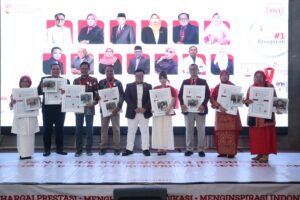
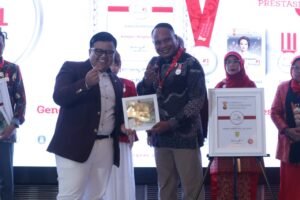
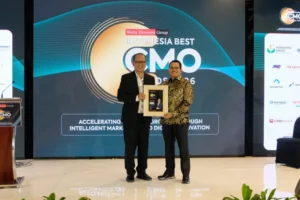
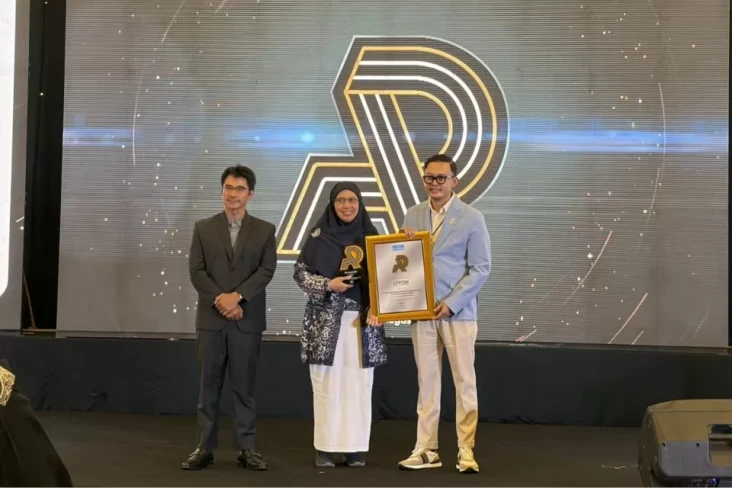
That dynamic was reflected in LPPOM’s recognition at the Indonesia Public Relations Awards (IPRA) 2026, where the organisation received an award in the Corporate Reputation category for the Non-Governmental Organization sector. The recognition was presented in Jakarta on August 6, 2026, with LPPOM President Director Muti Arintawati representing the organisation. The award was organised by The Iconomics Media with support from Axia Research.
The recognition is noteworthy not simply because it adds another award to LPPOM’s institutional record, but because it highlights a broader shift in how organisations are evaluated. Reputation is increasingly influenced by what stakeholders experience in practice—service quality, leadership, professional competence, social contribution and the organisation’s ability to communicate consistently.
For the halal economy, those factors have implications well beyond public relations.
Reputation as Part of the Halal Economy’s Infrastructure
The halal economy is frequently discussed in terms of market size, consumer demand, exports and business opportunities. Less visible, but equally important, is the institutional infrastructure that allows consumers and businesses to trust halal claims.
That infrastructure includes standards, certification processes, auditors, laboratories, regulators, manufacturers and other stakeholders.
LPPOM occupies an important position within this ecosystem through its halal inspection and assurance activities. Its laboratory operations, for example, support halal, quality and product-safety testing for industries ranging from food and beverages to cosmetics and pharmaceuticals. The laboratory also provides calibration, training and consultation services.
This illustrates why reputation matters.
A certification or testing process only creates meaningful value when stakeholders believe that the institution behind it is competent, consistent and trustworthy.
From Public Relations to Institutional Performance
The IPRA 2026 assessment offers an interesting perspective on reputation because it considers more than communication.
The Corporate Reputation category incorporates dimensions covering business and commercial reputation, people and leadership reputation, and social and citizenship reputation.
Such an approach reflects a broader trend in corporate reputation management: communications can shape awareness, but long-term reputation depends on organisational behaviour.
For LPPOM, that means the credibility of its public image ultimately has to be supported by the quality of its technical work.
In practical terms, a strong reputation requires competent personnel, reliable procedures, credible testing, transparent communication and consistent engagement with stakeholders.
Technical Competence Behind Public Trust
Technical capability is particularly important in halal assurance because modern supply chains are complex.
Products can involve numerous raw materials, additives, processing aids, packaging materials and manufacturing stages. A single product may also be connected to suppliers operating across different jurisdictions.
LPPOM’s laboratory infrastructure is designed to address some of these technical requirements. Its laboratory states that it operates under SNI ISO/IEC 17025:2017 and has been accredited by the National Accreditation Committee (KAN). Its services include chemical, microbiological and molecular testing as well as specific halal-related testing.
The laboratory also describes itself as a pioneer in halal-related testing and notes its experience in porcine-DNA analysis and other specialised testing methods.
These capabilities matter because reputation in the halal sector cannot be sustained solely through institutional history.
It requires evidence.
The Growing Complexity of Consumer Markets
Consumer expectations are changing at the same time as supply chains are becoming more complicated.
Consumers increasingly want to understand what they purchase, how products are made and whether claims made by brands can be trusted.
For businesses, this creates pressure to demonstrate compliance and product integrity.
The result is a growing overlap between halal assurance, quality assurance, product safety and corporate reputation.
LPPOM’s laboratory services reflect this convergence. Its current portfolio includes testing related to chemical parameters, microbiology, contaminants, DNA-based analysis, halal support, calibration and technical consultation.
The broader implication is clear: halal assurance is becoming part of a much wider conversation about product integrity.
Supporting Businesses Across Industries
The halal ecosystem also extends far beyond traditional food businesses.
LPPOM’s laboratory states that its services are available to SMEs and multinational companies and cover sectors including food and beverages, cosmetics and personal care, pharmaceuticals, hospitality, restaurants and catering, packaging, distribution and research.
This breadth is significant because the global halal economy is increasingly diversified.
Cosmetics companies, pharmaceutical manufacturers, hotels, restaurants, logistics operators and packaging producers may all encounter halal-related requirements.
As these sectors become more integrated, the need for credible technical and assurance services also increases.
SMEs and the Challenge of Market Access
One of the most important dimensions of the halal economy is its relationship with small and medium-sized enterprises.
SMEs represent a major part of economic activity in Indonesia and across emerging Asian markets. Yet smaller businesses can face greater challenges in navigating standards, testing requirements and certification processes.
Accessible professional services can therefore play an important role in helping SMEs meet market expectations.
LPPOM’s laboratory platform explicitly identifies both SMEs and multinational companies among the businesses it serves.
This creates an important connection between institutional reputation and economic inclusion.
If trusted assurance services are accessible to businesses of different sizes, halal standards can become a pathway to market development rather than simply another compliance requirement.
The International Dimension
The significance of halal assurance is no longer confined to domestic consumption.
Indonesia is part of a broader Asian market where halal products are increasingly connected to trade, tourism, food manufacturing, pharmaceuticals, cosmetics and consumer goods.
As companies expand across borders, they encounter different regulatory systems, certification practices and market expectations.
This makes institutional credibility increasingly important.
A company seeking to enter a new market must be able to demonstrate that its products meet relevant requirements. Trusted assurance institutions can help reduce uncertainty in those commercial relationships.
Laboratory Capability and Global Standards
Internationalisation also raises the importance of technical standards.
LPPOM’s laboratory experience with ISO/IEC 17025 accreditation is relevant in this context because the standard is associated with competence requirements for testing and calibration laboratories.
The laboratory says it has maintained accreditation since September 2016 and has expanded its physical, chemical and microbiological testing capabilities to serve international clients.
For companies operating in global supply chains, this type of technical infrastructure can provide an additional layer of confidence.
It also demonstrates how halal assurance increasingly intersects with international quality-management practices.
Reputation and Leadership
Institutional reputation ultimately depends on people.
Leadership determines how standards are implemented, how teams respond to changing requirements and how organisations balance technical integrity with customer expectations.
At LPPOM, Muti Arintawati has positioned reputation as a reflection of long-term organisational consistency rather than merely a communications achievement.
That perspective is important because reputational risk cannot be delegated entirely to a communications department.
Every interaction with a customer, business partner, auditor or stakeholder can contribute to how an organisation is perceived.
The Digitalisation of Trust
Digital transformation is also changing the way institutional trust is established.
Information can now be accessed instantly, while customers can compare providers, research credentials and share experiences through digital channels.
For organisations, this means reputation has become more visible—and more fragile.
An organisation may spend years building credibility, while inconsistent service or unclear communication can quickly create doubts.
This is why transparency and consistency are increasingly important components of reputation management.
Beyond the Award
The IPRA 2026 recognition should therefore be viewed as a milestone rather than a final destination.
For LPPOM, the challenge is to maintain the standards that generated stakeholder confidence while adapting to a rapidly changing business and regulatory environment.
That includes continued investment in people, technology, laboratory capabilities, education and stakeholder engagement.
The organisation’s laboratory platform already emphasises innovation, integrity, reliability, synergy and customer focus as core values.
Those principles are directly relevant to long-term reputation management.
What the Recognition Means for the Halal Industry
From an industry perspective, LPPOM’s recognition offers a useful reminder that the halal economy requires more than consumer demand.
It requires trusted institutions.
It requires technically competent laboratories.
It requires professional auditors and assurance systems.
It also requires businesses that understand that halal compliance can contribute to consumer confidence and market competitiveness.
In this sense, institutional reputation becomes an enabling factor for the entire ecosystem.
A Wider Economic Impact
The economic significance of trust should not be underestimated.
When businesses and consumers trust assurance systems, transactions become easier.
Companies can communicate product attributes with greater confidence. Consumers can make purchasing decisions with less uncertainty. International partners can evaluate products based on more credible information.
This can ultimately support trade and investment.
For Indonesia, strengthening the credibility of halal institutions can therefore contribute not only to domestic consumer confidence but also to the country’s ambitions in the international halal economy.
Conclusion
LPPOM’s recognition at the Indonesia Public Relations Awards 2026 highlights a broader transformation in the meaning of corporate reputation.
Reputation is no longer simply about visibility or public relations.
It is increasingly the result of technical competence, service quality, leadership, stakeholder engagement and the ability to demonstrate consistent performance.
For LPPOM, this principle is particularly important because its work sits within an ecosystem where trust is fundamental.
The organisation’s laboratory capabilities, including ISO/IEC 17025-based quality systems and specialised halal testing, provide part of the technical foundation behind that trust.
As Indonesia’s halal economy continues to evolve, the role of credible institutions will become increasingly important.
The next phase will not simply be about winning recognition.
It will be about maintaining confidence.
And in an increasingly interconnected global economy, that confidence may become one of the most valuable forms of infrastructure an organisation can build.
Sources
SINDOnews — Reputasi dan Kepercayaan Jadi Fondasi Penting bagi Organisasi