Askrindo strengthens its marketing strategy through data, AI, digital innovation and strategic partnerships to expand insurance inclusion and support sustainable growth.
JAKARTA, Indonesia — Marketing is undergoing a fundamental transformation across the financial services industry. Once largely associated with brand building and promotional campaigns, the function is increasingly being integrated into business strategy, customer intelligence, technology and measurable growth.
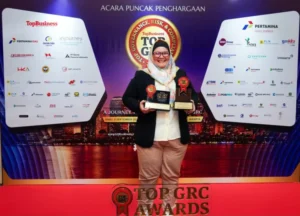
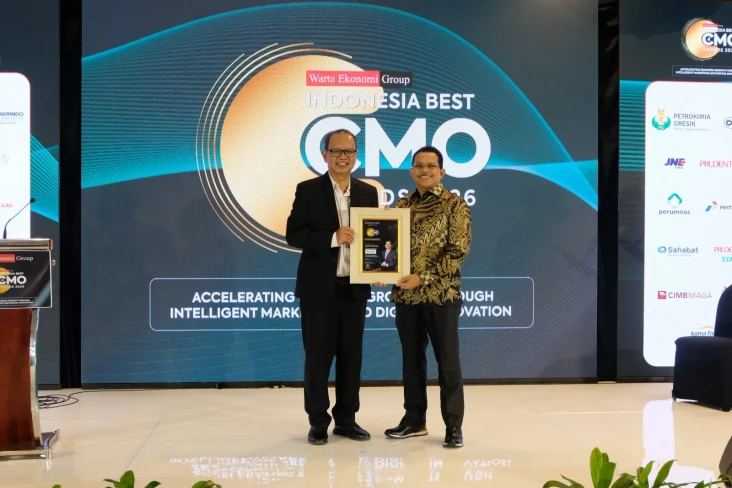
The shift is reflected in PT Asuransi Kredit Indonesia (Askrindo), an Indonesian state-owned insurance and guarantee company. Business Director Budhi Novianto received the Best Chief Marketing Officer 2026 in Encouraging Insurance Inclusion and Education through Strategic Partnerships award in the General Insurance category at the Indonesia Best CMO Awards 2026, organized by Warta Ekonomi.
The recognition highlights Askrindo’s effort to connect marketing strategy with its broader business objectives, particularly through strategic partnerships aimed at increasing public access to insurance and guarantee products.

For the insurance industry, the development illustrates a wider challenge: companies need to become more customer-focused and technology-enabled while maintaining the trust, risk discipline and long-term perspective inherent in financial protection services.
Marketing Becomes a Growth Function
Budhi Novianto described the changing role of marketing as one of the most significant developments facing business leaders today.
“Marketing has changed significantly. We can no longer talk only about brands or campaigns,” Budhi said, pointing to the increasing expectation that marketing should become a driver of business growth.
The shift changes how marketing performance can be viewed. Brand awareness remains relevant, but companies are increasingly interested in whether marketing activities generate customer engagement, improve market access and ultimately contribute to business objectives.
This approach is particularly significant for insurance companies, where purchasing decisions can depend on trust, understanding of risk and the perceived relevance of protection products.
As a result, marketing strategies need to bridge several functions simultaneously: customer education, product communication, distribution, technology and business development.
Data and AI Reshape Customer Understanding
Technology is becoming one of the key forces behind this transition.
Budhi said digital technology and artificial intelligence provide opportunities for Askrindo to gain a deeper understanding of customer behavior. At the same time, he emphasized that technology-driven initiatives need to demonstrate measurable business impact rather than simply generate awareness.
The distinction is important. Digital adoption by itself does not necessarily create business value. Its impact depends on how effectively organizations convert data into insights and insights into decisions.
For insurers, this can influence areas ranging from customer segmentation and product communication to service delivery and distribution. Better customer understanding can allow companies to design more relevant interactions while improving the ability to measure the effectiveness of marketing investment.
The development also creates new organizational requirements. Data quality, digital capabilities, responsible technology use and internal coordination become increasingly important as marketing becomes more dependent on technology.
Partnerships as a Route to Insurance Inclusion
Askrindo’s strategy also emphasizes strategic partnerships as a means of expanding access.
Budhi said collaboration should not be viewed merely as a conventional business arrangement. Instead, partnerships can serve as a mechanism for reaching broader communities and connecting customers with insurance and guarantee services.
“At Askrindo, we see collaboration not merely as cooperation, but as a way to open access,” Budhi said, adding that insurance inclusion requires an ecosystem because the challenge cannot be addressed by a single institution.
This approach has implications beyond marketing. Partnerships can create additional channels for education, distribution and customer engagement, particularly in markets where awareness and access to insurance remain important considerations.
For a company operating in insurance and guarantees, the ecosystem perspective also reflects the interconnected nature of financial services. Banks, businesses, government institutions, distribution partners and customers can all form part of the broader network through which protection solutions reach the market.
Askrindo’s Role in the Indonesian Economy
Askrindo describes itself as a state-owned company operating in insurance and guarantees. Established on April 6, 1971, the company says its role has been closely connected to Indonesia’s economic development, particularly through support for micro, small and medium enterprises.
The company identifies itself as a Collateral Substitution Institution, helping bridge the gap between eligible businesses that have insufficient collateral and financial institutions providing financing. Askrindo became part of Indonesia Financial Group, the state-owned insurance, guarantee and investment holding, in 2020.
That position gives the company a role that extends beyond conventional insurance distribution. Its activities are connected to access to financing, risk protection and the broader financial ecosystem.
The company’s official profile also states that it aims to provide risk protection solutions across economic segments while strengthening customer confidence through modern technology and agile human resources.
The Broader Industry Implication
The evolution of Askrindo’s marketing strategy reflects a broader development in financial services: the boundaries between marketing, technology and business strategy are becoming less distinct.
Companies increasingly need marketing leaders who understand customer behavior as well as commercial objectives. They also need technology teams capable of turning data into actionable information and business units capable of converting that information into products and services.
For the insurance sector, this transformation comes with an additional layer of complexity. Protection products require long-term customer trust, while digital channels encourage faster interactions and increasingly personalized experiences.
The challenge is therefore not simply to digitize marketing. It is to integrate technology with customer needs, business strategy and responsible risk management.
Askrindo’s approach illustrates one response to that challenge by combining data and technology with strategic partnerships and insurance education.
Recognition Amid Continued Transformation
The Best CMO Awards 2026 recognition adds to Askrindo’s record of industry and corporate awards. The company’s official awards page lists multiple recognitions received during 2026, as well as awards from previous years across insurance, leadership, digital and corporate reputation categories.
However, the significance of recognition in a rapidly changing industry ultimately depends on the ability to sustain the underlying strategy.
Budhi has emphasized that the next challenge is not simply adapting to technological change. The company must ensure that each strategic initiative contributes to growth while remaining relevant to the broader objective of expanding financial inclusion.
This perspective places marketing transformation within a longer-term business agenda. Data and AI may provide new tools, while partnerships can expand access, but both require clear strategic direction to create sustainable value.
From Marketing Awards to Long-Term Business Value
Askrindo’s latest recognition demonstrates how the role of marketing leadership is evolving within the insurance industry.
The modern marketing function increasingly sits at the intersection of customer experience, technology, data, partnerships and corporate growth. For insurers, it also carries the responsibility of communicating complex protection products in ways that customers can understand and access.
Askrindo’s strategy provides a case study of this transition in Indonesia. By linking marketing with strategic partnerships, digital technology and insurance inclusion, the company is positioning the function closer to the broader business agenda.
The longer-term measure will be how effectively these initiatives translate into wider access, stronger customer relationships and sustainable business performance.
For the global insurance industry, the direction is increasingly clear: digital transformation is changing not only how companies reach customers, but also how marketing itself is defined within the organization.