

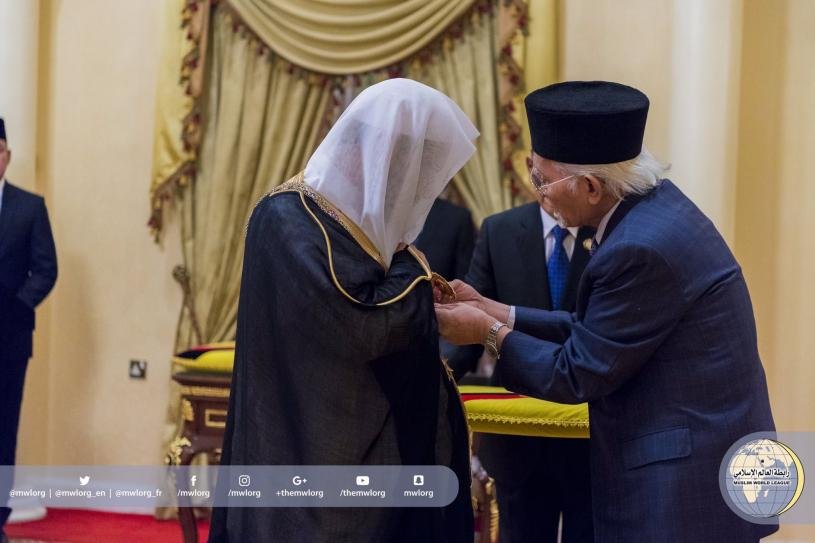
Malaysia’s Dato Sri honor for Mohammed Al-Issa reflects a broader evolution of religious diplomacy, interfaith engagement and international cooperation.
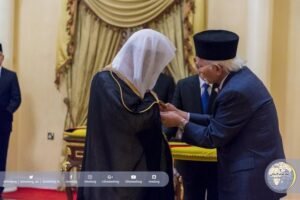
When Malaysia conferred its highest honorary title, Dato Sri, on Sheikh Dr. Mohammed bin Abdulkarim Al-Issa in 2017, the recognition highlighted more than an individual achievement. It also reflected the growing importance of moderation, interfaith dialogue and religious diplomacy in international engagement.
The honor was presented at a grand ceremony convened by the Sultan of Malaysia on April 17, 2017. According to the Muslim World League (MWL), Al-Issa received the title in recognition of his efforts to promote moderation. At the time, he had served as Secretary-General of the MWL since August 2016.
Al-Issa’s professional background has contributed to the international profile of his leadership. He holds academic qualifications in comparative Islamic jurisprudence and comparative judicial studies, as well as public law and constitutional law. Before leading the MWL, he held senior legal and judicial positions in Saudi Arabia.
Over the years, the scope of his international engagement has extended beyond traditional religious forums. The MWL’s official record documents his involvement in initiatives addressing moderation, tolerance, peace and intercultural understanding, while subsequent activities have increasingly connected religious leadership with wider questions affecting contemporary societies.
Malaysia has remained an important platform in that development. In April 2026, Malaysian Prime Minister Dato’ Seri Anwar Ibrahim received Al-Issa in Kuala Lumpur. Their discussions covered Islamic and international issues related to the mission and objectives of the MWL, as well as preparations for the Third International Summit of Religious Leaders and the fourth session of the ASEAN Council of Scholars.
The June 2026 summit further illustrated how religious diplomacy is becoming connected to broader global challenges. In his opening address, Al-Issa discussed the responsibility of religious leaders in contributing to peace and social harmony. He also addressed the risks associated with unrestricted exposure to modern technologies, particularly artificial intelligence, when not accompanied by intellectual resilience and ethical safeguards.
The emphasis on artificial intelligence is significant because technology is increasingly influencing education, communication, public discourse and social relations. For religious institutions, this creates a new policy and ethical environment in which traditional community leadership must interact with rapidly changing technological realities.
Youth engagement has also become part of this evolving agenda. During the 2026 activities in Kuala Lumpur, Al-Issa met young leaders drawn from university students and researchers across ASEAN countries. The program placed younger generations within the wider conversation about technology, ethics, social cohesion and regional cooperation.
The ASEAN dimension was reinforced through the fourth meeting of the ASEAN Council of Scholars, inaugurated in Kuala Lumpur in June 2026. The meeting brought together prominent muftis and scholars from ASEAN countries. A regional Arabic-language program for Qur’an memorizers was also launched as part of the activities.
From a global perspective, these developments point to a broader transformation in the way religious organizations participate in international affairs. Religious diplomacy increasingly intersects with education, youth development, peacebuilding, cultural understanding and ethical discussions surrounding emerging technologies.
The Malaysian honor awarded to Al-Issa in 2017 can therefore be viewed as an early milestone in a much longer international trajectory. Nearly a decade later, Malaysia remains a venue for high-level engagement involving governments, religious scholars, academics and young leaders from across Southeast Asia.
The broader trend is clear: international dialogue is no longer confined to government-to-government relations. Religious institutions, universities, civil society organizations and youth networks are increasingly involved in discussions about peace, social cohesion and the ethical implications of global change.
For the Muslim World League, continued engagement in Southeast Asia provides a regional platform for advancing its stated objectives through dialogue and cooperation. For the wider international community, the developments demonstrate how religious diplomacy can become part of a broader ecosystem of international engagement, particularly at a time when technological disruption and social fragmentation are creating new challenges across borders.