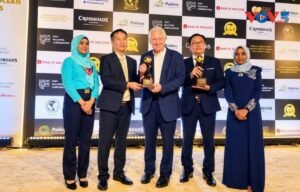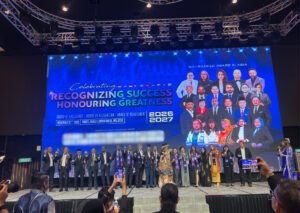


Vietjet’s two HR Asia Awards 2026 highlight how talent development, inclusion and workforce strategy are becoming increasingly important to global airline expansion.
The global airline industry is entering a period in which growth is increasingly measured not only by aircraft orders, passenger capacity or route expansion, but also by an airline’s ability to build a workforce capable of supporting a more complex international network. Vietjet’s latest recognition at the HR Asia Awards 2026 provides an example of how human capital is becoming an increasingly visible component of aviation strategy.
The Vietnamese carrier received two awards in 2026: HR Asia Best Companies to Work For in Asia 2026 and the HR Asia Diversity, Equity & Inclusion (DE&I) Award 2026. The Best Companies to Work For recognition marks Vietjet’s sixth consecutive year receiving the award, while the DE&I recognition represents its first award in that category.
The awards come as Vietjet continues to develop its international network and strengthen its position in the Asian aviation market. The company has been expanding connectivity between Vietnam and destinations across Southeast Asia and beyond, creating a business environment in which workforce capability must develop alongside operational scale.

Vietjet has nearly 10,000 employees and specialists from more than 68 countries and territories. Around 30 percent of its workforce comes from across Asia, while almost 30 percent are young professionals between the ages of 20 and 30. This combination gives the airline a distinctly multinational workforce at a time when aviation itself is becoming increasingly international.
For airlines, workforce diversity is not simply a human-resources issue. International operations require employees to interact with passengers, partners, regulators and colleagues from different cultural and linguistic backgrounds. Cabin crews, pilots, engineers, ground staff and corporate teams must coordinate across markets while maintaining consistent operational and service standards.
This is where the significance of the DE&I recognition becomes more apparent. The award acknowledges Vietjet’s efforts to create a workplace in which employees from different backgrounds can participate and develop. In a multinational airline, such an environment can also contribute to the organisational capacity needed to operate across diverse markets.
Training is another important part of the strategy. Vietjet has invested in professional development through the Victoria Aviation Academy (VIAA), which provides aviation training, leadership development and specialist programmes with participation from industry professionals. Such infrastructure becomes increasingly relevant as airlines expand their operations and face growing demand for qualified aviation personnel.
The relationship between workforce development and fleet expansion is particularly important. Vietjet announced plans in 2026 for 44 additional Airbus A320neo Family aircraft, comprising 24 A321neo and 20 A321XLR aircraft. Deliveries were scheduled to begin in July 2026, supporting the airline’s broader network development strategy.
An expanding fleet requires more than additional aircraft. It creates demand for pilots, cabin crew, engineers, maintenance specialists, airport personnel, customer-service professionals and managers. The ability to scale these functions without compromising operational standards becomes an important organisational challenge for any rapidly growing airline.
The same dynamic can be observed at the network level. Vietjet has continued to strengthen connectivity between Vietnam and major destinations in Southeast Asia, including Singapore and Indonesia. New routes such as Da Nang–Jakarta and Nha Trang–Singapore have contributed to the expansion of its regional footprint.
This trend reflects a broader transformation in the airline industry. Low-cost and hybrid carriers in particular have increasingly sought international growth by connecting secondary cities and emerging tourism markets directly, rather than relying exclusively on traditional hub structures. The strategy creates opportunities for market expansion but also increases the complexity of workforce management.
At the same time, the competition for aviation talent is becoming more international. Airlines are competing for qualified professionals while also responding to changing expectations among younger employees regarding career development, workplace culture, flexibility and inclusion.
Vietjet’s repeated recognition by HR Asia therefore provides an additional perspective on its growth strategy. The awards do not represent a comprehensive assessment of the airline’s overall business performance, but they highlight specific elements of workplace culture, employee engagement and diversity that are becoming increasingly relevant to large international organisations.
For the wider aviation industry, the lesson is broader than any single award. Aircraft can increase capacity, new routes can open markets, and technology can improve efficiency, but sustainable growth ultimately requires people capable of operating these systems effectively.
As airlines continue to expand across borders, human capital is likely to remain an important differentiator. Companies that can combine technical expertise with leadership development, multicultural capability and an inclusive workplace will be better positioned to manage the organisational complexity associated with international growth.
Vietjet’s two HR Asia Awards in 2026 arrive against precisely this backdrop. They add a human-capital dimension to the airline’s wider expansion story and illustrate how the future of aviation will be shaped not only by where aircraft fly, but also by the people who make increasingly interconnected networks possible.