



Prof. Bambang Karsono Wins Asia Impact Leaders Award 2026 | UBHARA JAYA Higher Education Leadership
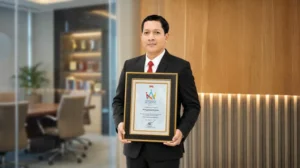
Prof. Bambang Karsono, Rector of Universitas Bhayangkara Jakarta Raya, receives the Asia Impact Leaders Award 2026 from the World Achievement Association amid growing demands for academic innovation, workforce development, and university transformation.
Higher Education Leadership in an Era of Global Change
SURABAYA, INDONESIA — Universities worldwide are confronting a fundamental shift in the way education is delivered, evaluated, and connected to society.
Artificial intelligence is reshaping knowledge-based work. Employers are reconsidering the skills required of graduates. Digital technologies are changing teaching and research practices, while governments and communities expect higher education institutions to demonstrate greater relevance and accountability.

These developments are placing new demands on university leadership.
The role of a rector increasingly extends beyond academic administration to encompass institutional resilience, workforce development, strategic partnerships, research priorities, and long-term educational quality.
Against this backdrop, Irjen. Pol. (Ret.) Prof. Dr. Drs. Bambang Karsono, S.H., M.M., Ph.D., D.Crim (HC), Rector of Universitas Bhayangkara Jakarta Raya (UBHARA JAYA) in Indonesia, received the Asia Impact Leaders Award 2026.
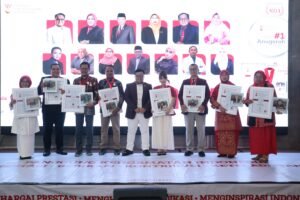
The recognition was conferred by the World Achievement Association (WAA) during an awards programme held on Saturday, 12 September 2026, at Shangri-La Hotel in Surabaya, East Java.
The event was led by GP Rajasa Pranadewa and recognised professional leadership across different sectors.
For Prof. Bambang Karsono, the award adds to a professional journey that has included senior public service responsibilities and leadership in higher education.
More broadly, the recognition provides an opportunity to examine how universities such as UBHARA JAYA are responding to the changing expectations placed on academic institutions.
From Public Service to University Governance
Prof. Bambang Karsono’s professional background includes service as an Inspector General in the Indonesian National Police.
His subsequent role as Rector of UBHARA JAYA represents a transition between two institutional environments with different responsibilities and operating principles.
Police institutions are structured around public security and law enforcement, while universities are responsible for education, research, academic inquiry, and community engagement.
The management of a university requires coordination among academic faculties, lecturers, students, researchers, administrative personnel, and external stakeholders.
It also demands respect for academic independence and the processes through which knowledge is developed and evaluated.
Experience in organisational leadership may provide useful perspectives on administration and institutional responsibility.
However, the effectiveness of university leadership must ultimately be assessed through academic governance, educational outcomes, research development, and the institution’s contribution to society.
As Rector, Prof. Bambang Karsono operates within this distinct environment of academic responsibilities.
A Renewed Leadership Mandate for 2026–2030
On 31 March 2026, Prof. Bambang Karsono was formally inaugurated for another term as Rector of UBHARA JAYA, covering the period from 2026 to 2030.
The ceremony was organised by the Brata Bhakti Foundation at the university’s Grha Tanoto Auditorium, Campus II, in Bekasi, West Java.
The appointment was based on a foundation decision dated 13 March 2026.
Leadership continuity can be significant for universities pursuing long-term institutional development.
Academic quality assurance, research capacity, infrastructure planning, and partnership programmes often require sustained coordination over several years.
At the same time, a renewed leadership term introduces the responsibility to review previous initiatives and respond to emerging challenges.
For UBHARA JAYA, the 2026–2030 period coincides with continuing changes in digital education, labour market requirements, and expectations for institutional accountability.
The effectiveness of its strategic direction will depend on how these developments are translated into practical academic and organisational improvements.
Academic Accreditation and Institutional Credibility
According to official university communications, UBHARA JAYA has achieved Unggul, the highest institutional accreditation classification under Indonesia’s applicable higher education accreditation framework.
Accreditation is an important component of formal quality assurance.
It provides an assessment of institutional performance against established standards and offers stakeholders a reference when evaluating educational institutions.
In an increasingly competitive higher education environment, quality assurance can also support public confidence and institutional credibility.
However, accreditation should not be viewed as a permanent guarantee of educational performance.
Universities must continue improving teaching quality, academic services, research activities, governance, and student support.
International discussions about higher education quality increasingly emphasise outcomes as well as institutional processes.
These include student progression, graduate competencies, research contributions, and the ability of institutions to respond to societal needs.
For UBHARA JAYA, maintaining academic standards remains an important responsibility during its current leadership period.
The Global Skills Transition and Graduate Employability
One of the most significant challenges facing universities is the changing relationship between academic qualifications and employment.
Technological developments are influencing the skills required across industries, including business services, manufacturing, administration, information technology, and public institutions.
Employers increasingly seek graduates who can combine specialised knowledge with communication, problem-solving, digital literacy, and adaptability.
This does not diminish the importance of academic education.
Rather, it reinforces the need for universities to ensure that disciplinary knowledge is accompanied by competencies relevant to professional practice.
Higher education institutions can respond through curriculum review, practical learning opportunities, professional partnerships, and graduate outcome evaluation.
In Indonesia, the relationship between universities and workforce development institutions is particularly relevant to efforts to improve graduate preparedness.
UBHARA JAYA’s Partnership with Indonesia’s Ministry of Manpower
On 19 June 2026, UBHARA JAYA signed a memorandum of understanding with Indonesia’s Ministry of Manpower.
The signing ceremony took place at the university’s Campus II in Bekasi and involved Prof. Bambang Karsono and the ministry’s Secretary-General, Dr. Cris Kuntadi, S.E., M.M.
The cooperation was intended to support education, research, and community engagement.
Partnerships of this kind can create opportunities for universities to better understand labour market developments and professional competency requirements.
They may also provide a foundation for academic activities that connect university knowledge with public policy and workforce development.
Nevertheless, the signing of an agreement does not itself establish measurable outcomes.
The effectiveness of institutional cooperation depends on subsequent implementation, the participation of relevant stakeholders, and the benefits produced.
For universities, assessing partnership outcomes is therefore an important part of strategic management.
Moving Beyond Agreements to Measurable Impact
Universities frequently establish relationships with government agencies, businesses, professional associations, and other educational institutions.
Such partnerships can support research collaboration, student development, professional training, and knowledge exchange.
However, institutional effectiveness requires more than a growing portfolio of agreements.
A useful evaluation framework may consider whether partnerships produce joint programmes, research outputs, student opportunities, professional development activities, or improvements in educational relevance.
Graduate tracking systems can also help universities understand how students progress after completing their studies.
Information about employment, further education, entrepreneurship, and the relationship between qualifications and professional responsibilities can provide valuable feedback.
These are potential indicators for assessing institutional development, rather than verified claims about UBHARA JAYA’s graduate outcomes.
A results-oriented approach can help universities distinguish between partnership activity and demonstrable educational impact.
Organisational Leadership and Institutional Capacity
Universities are complex organisations that must balance academic autonomy with administrative accountability.
Effective management requires clear responsibilities across the rectorate, faculties, academic programmes, research units, and supporting departments.
On 12 May 2026, Prof. Bambang Karsono inaugurated two university officials as part of UBHARA JAYA’s leadership arrangements.
Dr. Yayan Hendayana, S.E., M.M., was appointed Vice Rector III, while Dr. Dovina Navanti, S.T., M.M., was appointed Dean of the Faculty of Economics and Business.
Such appointments form part of the organisational processes through which universities distribute responsibilities and manage institutional programmes.
However, structural arrangements alone do not determine effectiveness.
Strong governance also depends on communication, transparency, professional competence, and the consistent implementation of academic priorities.
For university leaders, developing organisational capacity is essential to ensuring that institutional progress can be sustained beyond individual initiatives.
Artificial Intelligence and the Future of Learning
Artificial intelligence is becoming an increasingly important issue for higher education institutions.
AI-enabled tools can assist with information processing, learning support, administrative tasks, and certain research activities.
At the same time, their adoption raises questions about academic integrity, assessment methods, data protection, and the reliability of generated information.
Universities must therefore consider how technological innovation can be incorporated without weakening educational standards.
For lecturers, the challenge includes designing learning experiences that encourage independent thinking and genuine understanding.
For students, responsible AI use requires critical evaluation, ethical awareness, and the ability to distinguish reliable information from unsupported claims.
Institutional digital transformation also extends beyond the introduction of new software.
It involves developing staff capabilities, reviewing operational processes, and ensuring that technology serves educational objectives.
These issues form part of the wider environment in which UBHARA JAYA and other universities must plan their future development.
Research Development and Institutional Identity
Research remains a defining responsibility of higher education institutions.
Universities contribute to society by producing knowledge, examining complex problems, and developing evidence that can inform professional and public discussion.
UBHARA JAYA has developed academic interests related to national security, police studies, anti-corruption, and national defence awareness.
These fields reflect aspects of the university’s institutional background and academic identity.
Research activities in such areas can contribute to discussions about governance, public institutions, and societal challenges.
However, the value of academic research should be assessed through its quality, scholarly outputs, methodological integrity, and contribution to knowledge.
International visibility is not automatically established by the existence of research centres or specialised academic programmes.
It requires sustained research activity, credible scholarly engagement, and demonstrable contributions.
For university leadership, strengthening research capacity therefore involves both strategic direction and support for academic personnel.
Internationalisation and the Challenge of Global Relevance
Higher education internationalisation is often associated with cross-border partnerships, student mobility, international research collaboration, and global academic visibility.
Yet international relevance is not determined solely by the number of overseas agreements or promotional activities undertaken.
Universities must also consider the quality and sustainability of their international engagement.
Meaningful internationalisation can involve collaborative research, academic exchange, curriculum development, and participation in scholarly networks.
For Indonesian institutions, these opportunities exist alongside the responsibility to address domestic educational and social needs.
UBHARA JAYA’s publicly documented domestic partnerships and institutional developments provide a foundation for discussing its strategic direction.
However, specific claims about international expansion or global research performance would require separate evidence.
Professional Recognition and Reputation Management
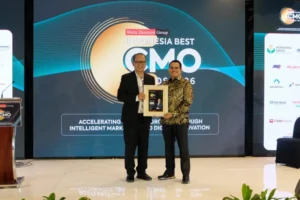
During 2026, Prof. Bambang Karsono was also named as a recipient of other professional leadership awards.
In February, he received the Best Transformational Leader in Private Higher Education 2026 recognition.
In May, he received The Most Impactful Leadership in Enhancing University’s Reputation of The Year 2026.
The Asia Impact Leaders Award 2026 from the World Achievement Association adds another recognition to his professional record.
These awards originated from different organising institutions and should be understood within their respective programmes.
Professional recognition may contribute to public awareness of a leader’s activities and institutional profile.
However, awards are distinct from official accreditation, academic rankings, and independent assessments of university performance.
Sustainable reputation depends on educational quality, research credibility, governance, graduate outcomes, and contributions to society.
For higher education institutions, effective reputation management should therefore remain connected to substantive academic development.
Measuring Leadership Through Institutional Outcomes
University leadership is frequently discussed in terms of vision, transformation, and organisational progress.
Yet meaningful evaluation requires measurable indicators.
These may include academic quality, student progression, graduate employment outcomes, research productivity, institutional partnerships, and the effectiveness of governance systems.
Such indicators should be interpreted in context, taking into account institutional resources, starting conditions, and the time required for programmes to produce results.
For UBHARA JAYA, documented developments such as institutional accreditation, organisational appointments, and cooperation with the Ministry of Manpower provide relevant areas for further evaluation.
A comprehensive assessment of their impact would require additional data on programme implementation and outcomes.
Asia Impact Leaders Award 2026 and the Next Phase of Development
The Asia Impact Leaders Award 2026 represents professional recognition for Prof. Bambang Karsono in his role as Rector of Universitas Bhayangkara Jakarta Raya.
It also offers an opportunity to consider the responsibilities of university leadership during a period of significant change.
For UBHARA JAYA, the 2026–2030 term presents continuing priorities in academic quality, institutional governance, research development, and workforce relevance.
These priorities require cooperation among university leaders, lecturers, students, administrative personnel, and external partners.
The long-term significance of institutional initiatives will depend on their implementation and the benefits they generate.
Leadership, Education, and Long-Term Institutional Value
Prof. Bambang Karsono’s professional journey, extending from senior public service to university leadership, reflects the different responsibilities that can accompany a career in institutional management.
At UBHARA JAYA, those responsibilities are connected to the university’s ability to maintain academic standards, support research, and prepare students for changing professional environments.
The Asia Impact Leaders Award 2026 adds a moment of recognition to that journey.
However, the broader challenge facing higher education is continuous rather than ceremonial.
Universities must demonstrate that their programmes remain relevant, their governance systems are effective, and their contributions extend beyond the campus.
In an era defined by technological disruption and changing workforce expectations, the lasting value of university leadership will be measured by the quality of institutions developed and the opportunities created for future generations.
For Prof. Bambang Karsono and UBHARA JAYA, the years ahead will provide an opportunity to translate institutional continuity into sustainable academic development and meaningful contributions to society.