



Fitriana’s journey with Dapoer Sehatku highlights how healthy food, cross-industry leadership, innovation and social impact can shape a sustainable business strategy.
Fitriana’s Cross-Industry Approach to Business, Innovation and Social Impact
Fitriana is building a business journey that extends beyond the conventional boundaries of the food industry. Through Dapoer Sehatku, a healthy food business established in 2017, she has developed a model that combines product innovation, quality control, customer engagement and women empowerment with her broader experience in technology, healthcare and other industries.
The business began with a relatively straightforward proposition: healthy food should not be synonymous with bland or unappealing food. From that starting point, Dapoer Sehatku has expanded its product portfolio while positioning quality and customer trust as important elements of its business strategy. Fitriana describes trust as something that must be built through consistency, quality, service and long-term commitment.
Public professional information also reflects the breadth of her business experience. Her LinkedIn profile identifies her as the owner of Dapoer Sehatku and records previous senior roles in technology and healthcare, including Chief Marketing Officer at Prima Sarana Solusi and Head of Sales and Marketing Group at BIMC Siloam in Bali.
That cross-industry background has influenced the way Fitriana approaches business development. Rather than viewing food, technology, healthcare and other sectors as completely separate fields, she sees common management principles connecting them: clear strategy, capable people, governance, innovation and the ability to respond to changing market conditions.
From Healthy Food to a Broader Consumer Proposition
Dapoer Sehatku’s development reflects the changing expectations surrounding the healthy food market. Consumers increasingly look beyond the basic promise of a product and consider factors such as ingredients, convenience, product variety and the overall experience offered by a brand.
Fitriana has developed products including Detox Delight, Vegan Delight and healthy cakes and food options. In 2026, the business also began producing more personalized cake designs for occasions such as birthdays and anniversaries, according to the interview material.
This direction represents a broader approach to healthy food positioning. Instead of restricting the business to a narrow health-oriented niche, Dapoer Sehatku is seeking to connect healthier choices with everyday consumption and special occasions.
Previous public interviews similarly describe Fitriana’s focus on gluten-free, low-fat and sugar-free food products, while highlighting her emphasis on product development, digital promotion and customer needs.
The challenge for businesses operating in this segment is therefore not simply creating a healthier product. It is creating products that consumers are willing to choose repeatedly while maintaining consistent standards and a commercially sustainable operation.

Leadership as a System, Not a Personality
One of Fitriana’s central leadership principles is that business growth should eventually move beyond dependence on its founder.
She describes her leadership approach as lead by example, while emphasizing the importance of organizational structure, capable human resources and distributed responsibility. Her role, in this model, is increasingly focused on strategic direction and ensuring that the company’s vision and standards remain aligned.
This philosophy reflects a broader issue faced by growing entrepreneurial businesses: the transition from founder-led operations to organizational leadership.
A business may initially depend heavily on the founder’s personal decisions, relationships and ability to execute. As it grows, however, that model can become a constraint. Systems, processes and capable managers become necessary to maintain consistency while allowing the organization to expand.
Fitriana’s approach is therefore less about maximizing the number of decisions made by one leader and more about developing people who can make appropriate decisions within a defined strategic framework.
Innovation Through Customer Participation
Innovation at Dapoer Sehatku is also being approached as an ongoing process rather than a one-time product launch.
Fitriana highlights the Kitchen Lab as a space for experimentation and product development. She also wants customers to contribute ideas and feedback, effectively turning consumers into participants in the product-development process.
This approach has strategic implications. Customer participation can help food businesses identify changing preferences while reducing the distance between product development and actual market demand.
The principle is consistent with Fitriana’s broader view that quality should be demonstrated through the product itself rather than relying solely on marketing claims.
The company is also developing Legit Sehat Indonesia, launched in 2023, as part of her effort to expand the availability of healthier product choices.
Healthcare Experience and Indonesia’s Medical Tourism Potential
Fitriana’s business perspective is also shaped by her earlier involvement in healthcare and medical tourism.
Her professional profile records her tenure as Head of Sales and Marketing Group at BIMC Siloam in Bali between 2014 and 2015. Her responsibilities included strategic planning and marketing communications across the hospital group’s operations.
Her involvement in Bali’s healthcare industry gave her direct exposure to the potential of medical tourism. In a 2015 report by TTG Asia, Fitriana, then identified as head of marketing at BIMC Siloam Hospitals Group Bali, discussed Indonesia’s emerging medical tourism sector and the importance of international healthcare standards and proximity to overseas markets.
The sector remains strategically relevant because medical tourism does not operate solely through hospitals. It depends on a broader ecosystem involving healthcare quality, international standards, accessibility, hospitality, patient confidence, transportation and tourism infrastructure.
Fitriana’s continuing interest in medical tourism therefore provides another dimension to her cross-industry perspective: healthcare and tourism can intersect with economic development when supported by appropriate standards and infrastructure.

Business Growth and the Discipline of Sustainable Expansion
For Dapoer Sehatku, the next stage involves strengthening the business foundation while exploring further expansion.
Fitriana has identified potential outlet development in South Jakarta and Bandung. At the same time, she stresses that expansion should be calculated carefully.
Her position reflects a strategic distinction between rapid growth and sustainable growth. Opening new locations can increase market reach, but expansion also introduces additional requirements in staffing, supply chains, quality control, operational management and financial discipline.
For a healthy food business, maintaining product consistency across locations can become particularly important because the brand promise depends heavily on consumer trust.
The emphasis on systems therefore becomes critical. Expansion is not simply about increasing the number of outlets; it requires the organization to reproduce its standards in different operating environments.
Women Empowerment as Part of the Business Equation
Fitriana also connects entrepreneurship with women’s economic participation.
Through Women Empowerment initiatives associated with Dapoer Sehatku, she aims to create opportunities for women to develop skills and build greater economic independence.
Her view is that empowerment requires more than motivation. Women also need access to knowledge, opportunities, supportive environments and systems that allow them to develop their capabilities.
This perspective places women empowerment within a broader economic framework. Skills development and access to opportunities can potentially strengthen individual earning capacity while contributing to the resilience of families and communities.
Her approach also reflects her belief that professional ambition and social responsibility do not have to compete with one another.
Recognition as a Milestone, Not an Endpoint
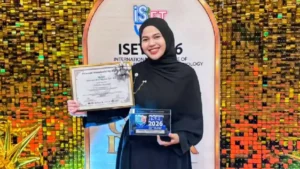
Fitriana received several business recognitions in 2025, including Excellence Women Entrepreneur Winner 2025 from The Great Champions of Asia, Global Business Leaders Award 2025 with the recognition Outstanding Business Women of the Year – Business Excellent Icon, and Asia Most Recommended Awards 2025 in the Food category, according to the interview material.
Rather than treating these recognitions as the final measure of success, Fitriana views awards as acknowledgements of a broader process involving teams, customers and business partners.
Her position is consistent with her wider philosophy of reputation: recognition can provide visibility, but long-term credibility depends on consistency.
This distinction becomes increasingly important as entrepreneurs build personal and corporate brands in markets where public recognition can influence reputation but cannot substitute for operational performance.
Building a Broader Definition of Business Impact
Fitriana’s business journey illustrates an increasingly multidimensional definition of entrepreneurship.
Dapoer Sehatku represents the consumer-facing side of her activities, while her experience in technology and healthcare has contributed to a broader understanding of innovation, marketing, management and market development. Her interest in mining and other sectors adds another layer to that cross-industry perspective.
Her involvement in humanitarian activities also reflects an effort to connect business experience with social contribution. She is involved with Lions Club Jakarta Kartini and has participated in humanitarian responses related to disasters, according to the interview.
For Fitriana, business growth therefore sits within a larger framework. A successful enterprise should generate commercial value, but it can also create opportunities for people, encourage healthier consumer choices and contribute to communities.
Her long-term direction is consequently not centered on expansion at any cost. The stated priority is to strengthen systems, improve quality, continue innovation and pursue sustainable growth across the businesses and sectors in which she is involved.
In an increasingly interconnected economy, that approach offers a practical lesson for entrepreneurs: diversification can create opportunities, but sustainable growth ultimately depends on the quality of leadership, systems, people and the ability to adapt.